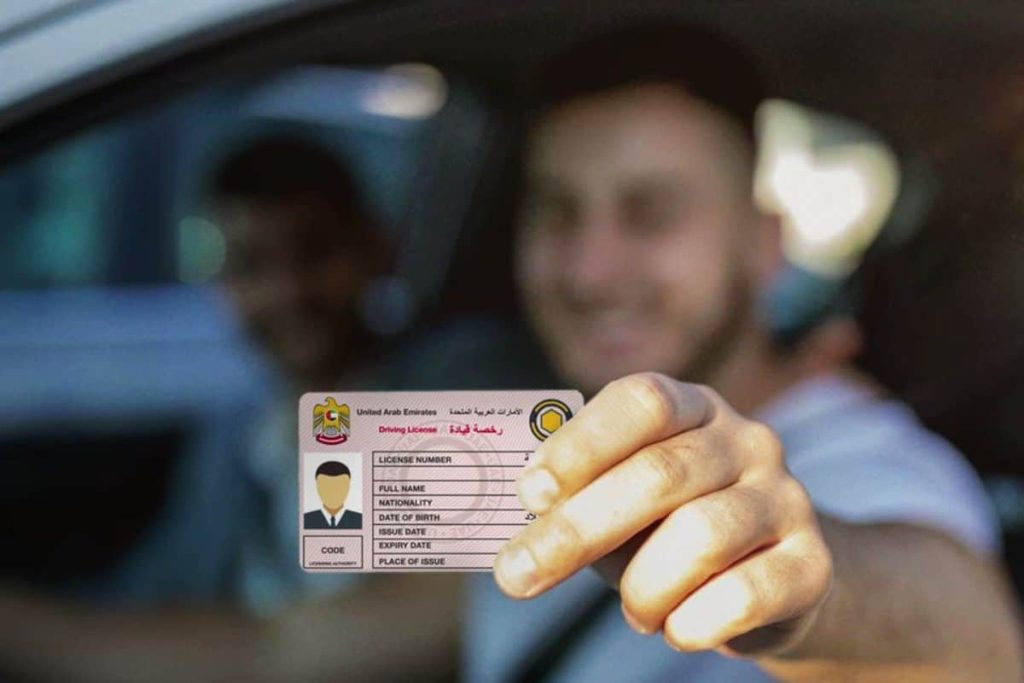

Obtaining a driving license and strictly adhering to the traffic regulations are foundational aspects of life in the UAE. The entire process is meticulously centralized and regulated by key government authorities, such as the Roads and Transport Authority (RTA) in Dubai and the Drivers Licensing Department (DLD) in Abu Dhabi, ensuring high standards of driver competency and road safety across the Emirates.
Part 1: Obtaining a UAE Driving License
The method for acquiring a light vehicle driving license depends fundamentally on your country of origin and the validity of your existing license.
1. Direct Exchange (Transfer)
If you hold a valid, permanent license from an eligible country—a list that includes a large number of nations from North America, Europe, East Asia, the Pacific, and the Gulf Cooperation Council (GCC)—you are typically permitted to transfer your existing license directly. This crucial privilege eliminates the need to undergo extensive driving lessons or take the final road test.
Process Overview:
- Eye Test: This must be the first step, conducted at any RTA or approved optical centre to verify visual acuity.
- Document Submission: You must present your valid original foreign license, your original Emirates ID (proving residency status), and in cases where the license is not in English or Arabic, an official legal translation is required.
- Payment and Issuance: Upon successful verification, you pay the applicable administrative fees and receive your new UAE driving license.
- Key Requirement: Direct exchange is strictly available only to residents of the UAE who possess a valid Emirates ID. Tourists cannot utilize this service.
2. Full Training and Testing (For Non-Eligible Countries)
If your home country is not included on the approved list, you are required to enroll in a registered, authorized driving institute and complete the full mandatory training program.
Steps for New Applicants:
- Open Traffic File: Register your details and obtain your learning permit at an approved driving institute.
- Eye Test & Medical Check: Complete the required medical examination alongside the vision test.
- Theoretical Training: Attend mandatory classes (available online or in-person) covering traffic laws, road signs, and safe driving principles specific to the UAE.
- Theory Test: This must be successfully passed before the applicant is permitted to commence practical, hands-on driving training.
- Practical Training: Complete the required number of driving lessons. The total mandatory hours vary based on any prior driving experience the applicant may document.
- Internal & RTA Tests: The final stages involve passing internal assessments conducted by the institute, followed by the government-administered RTA Yard (Parking) Test, and finally, the rigorous RTA Road Test with an authorized examiner.
- License Issuance: Upon successfully passing the final road test, the driving license is officially issued.
Age Requirement: The minimum age to obtain a light vehicle driving license is uniformly 18 years across all Emirates.
Part 2: Car Driving Rules and Penalties in the UAE
The UAE maintains an exceptionally strict traffic enforcement system, characterized by heavy financial fines, mandatory black points (demerit system), and a severe, zero-tolerance approach to serious offenses.
Core Driving Laws and Enforcement
| Rule Category | Requirement | Enforcement and Penalty System |
| Seatbelts & Child Safety | Mandatory for all occupants (front and rear seats). Children under four years old must be secured in a suitable child safety seat. | Non-compliance incurs significant financial fines plus black points applied to the driver’s record. |
| Mobile Usage | Strictly prohibited unless the device is being used via a hands-free system. Using a handheld phone for calls, texting, or navigation is considered a major violation. | Result in financial fine plus black points. |
| Alcohol/Drugs | The policy is strictly zero tolerance. Driving under the influence results in the most severe penalties. | Leads to immediate confiscation/suspension of the license and escalation to court action, potentially involving heavy fines and jail time. |
| Speed Limits | Enforcement is exceptionally strict, utilizing speed cameras, smart surveillance, and radar systems. Limits vary significantly: typically 100–120 km/h on highways and as low as 40 km/h in residential areas. | Fines are tiered based on the degree of excess speed; severe speeding triggers vehicle impounding in addition to fines and black points. |
| Lane Discipline | Driving is always on the right-hand side. The far-left lane is reserved strictly for overtaking or faster-moving vehicles. Tailgating is a highly penalized offense due to its role in chain-reaction accidents. | Violations result in fines and black points. |
The Black Points Demerit System
The UAE operates a systematic demerit points system designed to track and control habitual poor driver behavior:
- Accumulation: Every specific traffic violation is assigned a corresponding number of black points, which are added to the driver’s record upon conviction.
- Threshold: A driver accumulating 24 black points within a single year automatically triggers mandatory license suspension. The duration of this suspension increases for repeat offenders.
- Recovery: Drivers who have not yet reached the maximum threshold may have the option to enroll in approved specialized courses designed to reduce their accumulated black points, promoting corrective behavior.
By understanding and respecting these rigorous rules and the stringent licensing process, drivers contribute directly to the UAE’s goal of maintaining its high standard of road safety.