
Automotive manufacturing has transformed dramatically over the past century. What began as manual assembly processes has evolved into highly automated production ecosystems powered by robotics, artificial intelligence, and precision engineering. Today’s vehicle factories combine speed, accuracy, and safety to produce millions of reliable vehicles each year.
Understanding how manufacturing moved from traditional assembly lines to intelligent automation helps explain why modern vehicles are safer, more efficient, and more consistent in quality. 🚗
The Origins of the Automotive Assembly Line
Early vehicle production relied heavily on skilled labor performing individual tasks at fixed workstations. Manufacturing output remained limited until moving assembly lines reshaped industrial productivity.
Key advantages of early assembly-line production included:
- Faster vehicle production cycles
- Reduced manufacturing costs
- Standardized component installation
- Improved workflow coordination
The assembly line allowed manufacturers to scale operations and make vehicles accessible to a broader population.
How the Traditional Assembly Line Worked
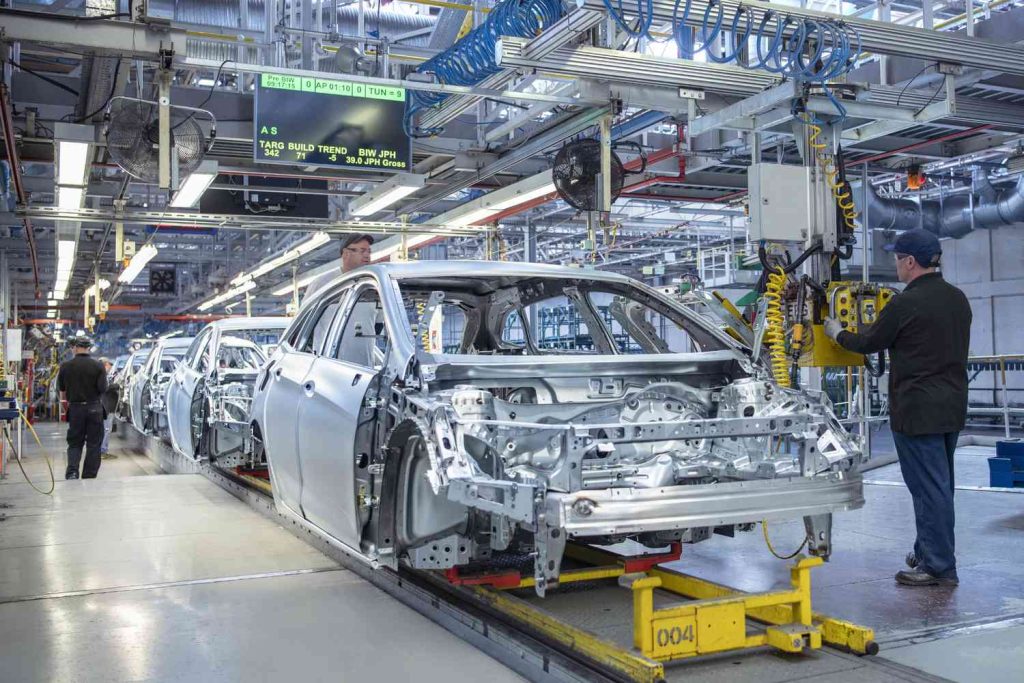
In conventional assembly systems, vehicles moved step-by-step through structured stations where workers installed specific components.
Typical stages included:
- Frame construction
- Engine installation
- Electrical wiring placement
- Interior fitting
- Painting and finishing
Each stage depended on timing precision and worker coordination to maintain production flow.
Although efficient for its time, manual assembly lines had limitations in speed and consistency.
The Shift Toward Industrial Automation
As vehicle demand increased globally, manufacturers introduced automation to improve accuracy and efficiency. Robotic systems began handling repetitive and physically demanding tasks.
Automation improved manufacturing by enabling:
- Higher production speed
- Reduced human error
- Consistent welding quality
- Safer workplace conditions
These improvements helped manufacturers meet rising safety and quality expectations.
The Role of Robotics in Modern Vehicle Production
Robotic arms now perform many essential manufacturing tasks that once required large teams of workers.
Common robotic applications include:
- Precision welding
- Component placement
- Spray painting
- Material handling
- Quality inspection scanning
Robots operate with millimeter-level accuracy, improving both durability and structural consistency.
This level of precision contributes directly to vehicle safety performance. 🤖
Smart Manufacturing and Digital Integration
Modern automotive factories rely heavily on connected technologies that monitor production in real time.
Digital manufacturing systems support:
- Predictive maintenance scheduling
- Automated defect detection
- Inventory tracking optimization
- Real-time workflow adjustments
These capabilities reduce downtime and improve production reliability.
Smart systems also allow manufacturers to respond quickly to changing customer demand.
Artificial Intelligence in Automotive Production
Artificial intelligence has become an essential tool in modern manufacturing environments. It enhances decision-making and improves operational efficiency across production stages.
AI supports manufacturing through:
- Visual inspection systems detecting micro-defects
- Predictive analytics preventing equipment failure
- Production-line optimization
- Supply-chain coordination improvements
These technologies reduce waste while improving overall product quality.
Benefits of Automation in Automotive Manufacturing
Automation has reshaped vehicle production by improving both efficiency and reliability across factories worldwide.
Major advantages include:
- Faster production timelines
- Higher safety standards
- Lower long-term operational costs
- Improved product consistency
- Reduced workplace injury risk
Manufacturers now produce vehicles with tighter tolerances and stronger structural integrity than ever before.
Challenges Associated With Manufacturing Automation
Despite its advantages, automation introduces operational challenges that manufacturers must carefully manage.
Common concerns include:
- High initial investment costs
- Workforce retraining requirements
- Technology integration complexity
- Cybersecurity risks in connected factories
Balancing automation with human expertise remains essential for maintaining flexible production systems.
The Human Workforce Still Plays a Critical Role
Even in highly automated facilities, skilled workers remain central to manufacturing success. Human oversight ensures systems operate correctly and adapt to unexpected issues.
Workers contribute through:
- Equipment monitoring
- Process optimization
- Quality assurance validation
- Engineering adjustments
Automation enhances human productivity rather than replacing it entirely. 🔧
The Future of Automotive Manufacturing
Vehicle production continues evolving toward fully connected smart factories capable of autonomous decision-making.
Emerging trends include:
- Collaborative robots working alongside humans
- Digital twin simulations improving production planning
- Sustainable manufacturing using recyclable materials
- Electric vehicle–focused assembly platforms
These innovations will shape how vehicles are produced over the coming decades.
FAQ: Automotive Manufacturing and Automation
1. What is the main purpose of automation in automotive manufacturing?
Automation increases production efficiency, improves precision, and helps maintain consistent vehicle quality across large production volumes.
2. Are automated factories safer than traditional manufacturing plants?
Yes, automated environments reduce exposure to hazardous tasks such as heavy lifting and high-temperature welding operations.
3. Do automated systems reduce manufacturing time significantly?
Automation speeds up repetitive processes and allows continuous operation, which shortens production cycles.
4. Can automation improve vehicle durability?
Yes, robotic precision ensures consistent welding strength and accurate component alignment, improving structural reliability.
5. Is automation used in electric vehicle manufacturing differently?
Electric vehicle assembly often involves specialized battery installation systems and dedicated safety monitoring technologies.
6. What skills are needed to work in automated automotive factories?
Modern facilities require technical expertise in robotics operation, diagnostics, programming support, and quality-control systems.
7. How does automation support environmentally friendly vehicle production?
Automation improves material efficiency, reduces waste, and enables better monitoring of emissions during manufacturing processes.